The United States government owns more bitcoin than any other country on earth. Not because it bought any. Because it caught criminals, took their coins, and never sold them.
That’s the short version of the strategic Bitcoin Reserve USA story. A long story consists of an executive order, a stymied Senate bill, twelve states competing to implement a similar concept, and a genuine discussion about how much of all of that is actually beneficial for the nation. Here is the reality at the moment, stated clearly.
What Is the Strategic Bitcoin Reserve?
On March 6, 2025, President Trump enacted Executive Order 14233, which included both creation of the Strategic Bitcoin Reserve and establishment of the US Digital Asset Stockpile. They are easily confused, so keeping them apart is useful.
The Reserve holds bitcoin only. About 198,000 BTC went in at the start, all of it seized from criminals through forfeiture cases. The order says none of that bitcoin can be sold. It just sits there, the same way the country holds gold.
The stockpile is different. It holds other seized crypto, things like Ethereum, XRP, Solana, and Cardano. The Treasury has more freedom to manage or sell those assets. Only the bitcoin side has that strict “do not sell” rule.
Neither pool was built with tax dollars. Every dollar that was seized on those accounts was through the process of criminal and civil forfeiture. The forfeitures included seizures made in drug cases, fraud cases, and arrests in the dark web.
How Much Bitcoin Does the US Government Actually Own?
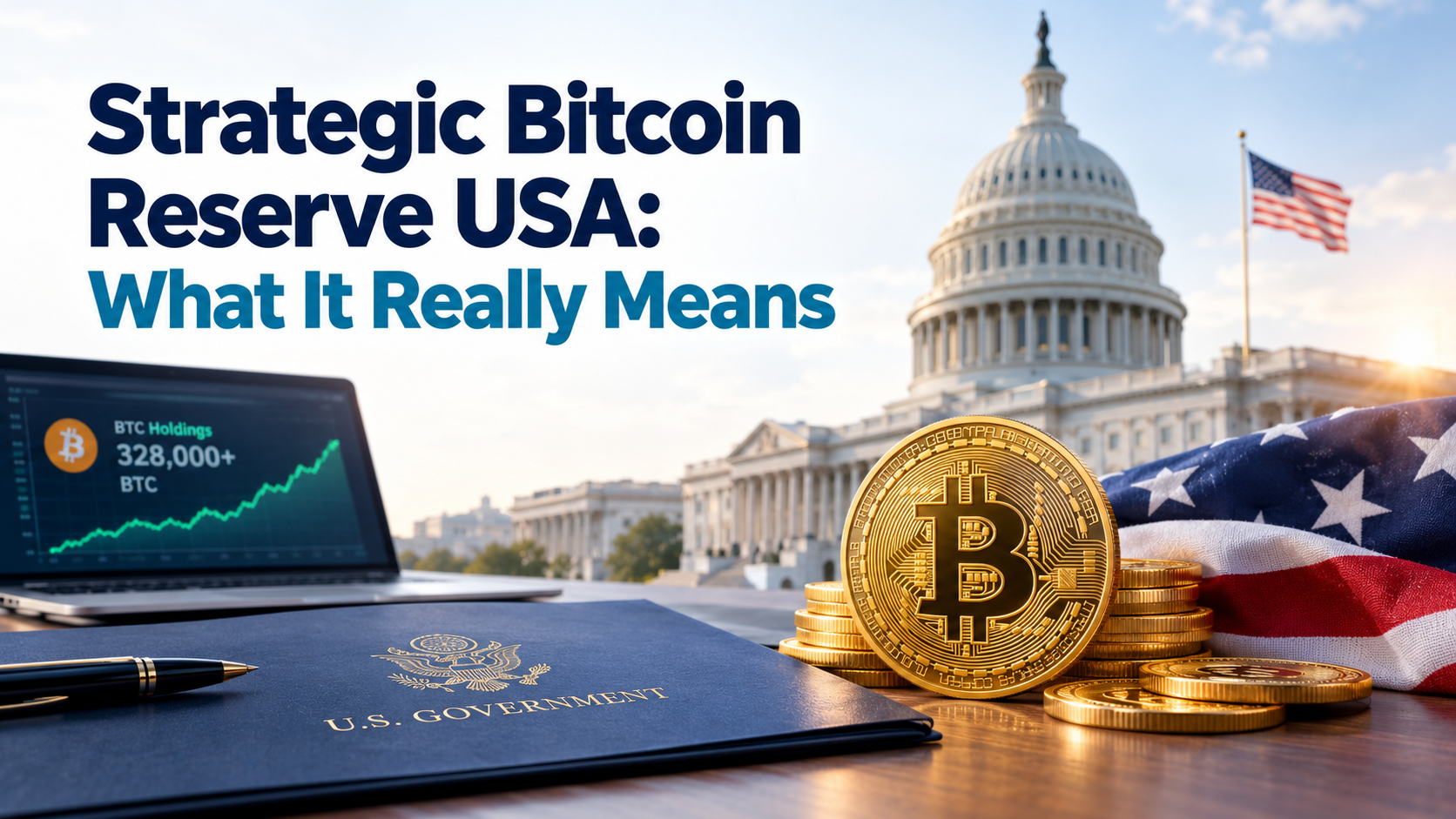
The strategic bitcoin reserve USA holds is larger than most people realize once you count every federal agency, not just the Reserve itself. Counting everything held across federal agencies, the U.S. government’s bitcoin position sits above 328,000 BTC as of early 2026. That includes coins held by the Justice Department, the IRS Criminal Investigation unit, and the US Marshals Service, who’ve been collecting seized bitcoin piece by piece for years.
Nobody has ever done a full, clean audit of these holdings. That’s part of what the executive order tried to fix. It told agencies to account for every coin they’re sitting on, because for years the numbers were scattered and nobody had the full picture.
There’s a real cost to guessing wrong here, too. Past administrations sold seized bitcoin early, back when prices were far lower. Officials have pointed to over $17 billion in value the government gave up by cashing out too soon. That history is a big reason the new order bans future sales outright.
The BITCOIN Act: What the Senate Bill Would Actually Change
An executive order is not legislation; it can be overturned by any future president with a simple signature. Trump did this, too.That’s exactly why Senator Cynthia Lummis and Representative Nick Begich introduced the BITCOIN Act, a bill meant to turn the policy into something permanent.
The bill would go further than the executive order in a few specific ways:
The Treasury would be authorized to buy up to 1 million BTC over five years, capped at 200,000 BTC per year. That’s roughly 5% of all the bitcoin that will ever exist. Funding would come from existing Federal Reserve remittances and a revaluation of old gold certificates, not new taxes or federal borrowing.
Any bitcoin placed in the reserve would be locked up for a minimum of 20 years, by law, with narrow exceptions tied to paying down debt. The bill also protects the right of ordinary Americans to hold their own bitcoin in a private wallet without government interference, a provision that has nothing to do with the reserve itself but matters to a lot of bitcoin holders.
As of early 2026, the bill still sits with the Senate Banking Committee; no floor vote is scheduled. And here’s the odd part: Treasury Secretary Scott Bessent has said outright that the government “won’t be buying” more bitcoin right now, even though the executive order already lets it, as long as the purchases are budget-neutral. So the authority is there. Nobody’s using it.
States Are Building Their Own Bitcoin Reserves Too
This isn’t only a federal story. New Hampshire became the first state to pass its own bitcoin reserve law, back in May 2025. Texas followed with a similar law, run through its Comptroller of Public Accounts, that only allows purchases of cryptocurrencies with a market cap above $500 billion over the past two years, a bar only bitcoin currently clears.
More than a dozen other states have introduced comparable bills. Most follow the same basic shape: let the state treasury hold a small allocation of bitcoin as a hedge, similar to how a state might hold gold or foreign currency reserves. None of these state efforts require federal approval, and they move at very different speeds depending on the state legislature.
If you want to track how individual states and federal proposals compare, our team keeps an updated breakdown on the strategic bitcoin reserve USA policy landscape at USA Crypto Trends, covering each state bill as it moves.
The Case For and Against a Bitcoin Reserve
The argument for it is pretty simple. The US already owns hundreds of thousands of bitcoin from forfeiture cases; selling it early has already cost billions in missed value, and holding it the way the country holds gold protects against repeating that mistake while other countries start building their own positions.
The argument against it is messier. Bitcoin can lose a third of its value in a matter of weeks, so calling it a reserve asset like gold doesn’t quite hold up once prices actually move. Custody is a real problem too. Government bitcoin wallets have already been targeted, and reports from early 2026 pointed to a breach of Marshals Service holdings, with loss estimates anywhere from $25 million to over $60 million depending on who’s reporting it. Securing this much bitcoin is harder than the policy papers make it sound.
And underneath all of it sits a simpler risk: none of this is law yet. It runs on an executive order, which means a future president could reverse it, start selling, or just let it quietly stall. That’s enough to keep some investors and lawmakers from treating it as permanent.
What Happens Next
A few things are worth watching this year. The big one is whether the BITCOIN Act ever gets a real vote out of the Senate Banking Committee, because that’s the step that turns this from an order into a law. Also worth watching: whether Treasury actually uses the budget-neutral buying power it already has, instead of just holding what it seized. And honestly, the states might be the faster story. That trend has outpaced anything happening in Washington so far.
For now, the strategic bitcoin reserve is real; it’s the largest known sovereign bitcoin position in the world, and it isn’t going away on its own. Whether it grows into something bigger depends on a Senate committee that hasn’t scheduled a vote yet.
If you’re tracking how this policy affects the broader crypto market, we cover it as it develops at USA Crypto Trends.
Frequently Asked Questions
What is the strategic Bitcoin reserve of the USA?
It’s a US government-held stockpile of bitcoin, created by executive order in March 2025. It’s made up entirely of bitcoin seized in criminal and civil forfeiture cases, and the order bans selling any of it.
How much bitcoin does the US government own?
For all government departments combined, the number exceeds 328,000 BTC by early 2026. Out of this total, roughly 198,000 BTC is officially part of the Strategic Bitcoin Reserve.
Is the BITCOIN Act the same thing as the executive order?
No. The executive order already exists and is in effect. The BITCOIN Act is a proposed law that would make the policy permanent and let the Treasury buy up to 1 million BTC over five years. It’s still sitting in a Senate committee.
Did the US government buy this bitcoin?
No.All the coins have been seized by law enforcement agencies through criminal prosecutions, such as drug trafficking and fraud. The government has not used any taxpayers’ money to buy bitcoin.
Can a future president cancel the reserve?
Yes. Since it was created by executive order and not by an act of Congress, a future president could reverse it. That’s the main reason lawmakers are pushing the BITCOIN Act, to lock the policy into law.