An Ohio man lost $40,000 worth of bitcoin last year. Not due to hacking. Not due to any kind of scam. Rather due to a dropped phone into a lake, where his only copy of his recovery phrase was stored in notes on his phone.
That is precisely why choosing the best crypto wallet 2026 cannot be seen as simply finding an app which seems to suit your taste, but choosing a cryptocurrency wallet which works for you and backing it up the right way.
What a Crypto Wallet Actually Does
Unlike an actual wallet that holds money in the form of cash, the crypto wallet does not store your coins in any physical form. Coins always remain stored in the blockchain; the wallet stores your cryptographic key only.
Lose the keys, and there’s no customer service line to call. Nobody resets your password. That’s the tradeoff for owning crypto outright instead of leaving it on an exchange.
Hot Wallets vs. Cold Wallets
Wallets split into two basic types, and the difference matters more than the app icon does.
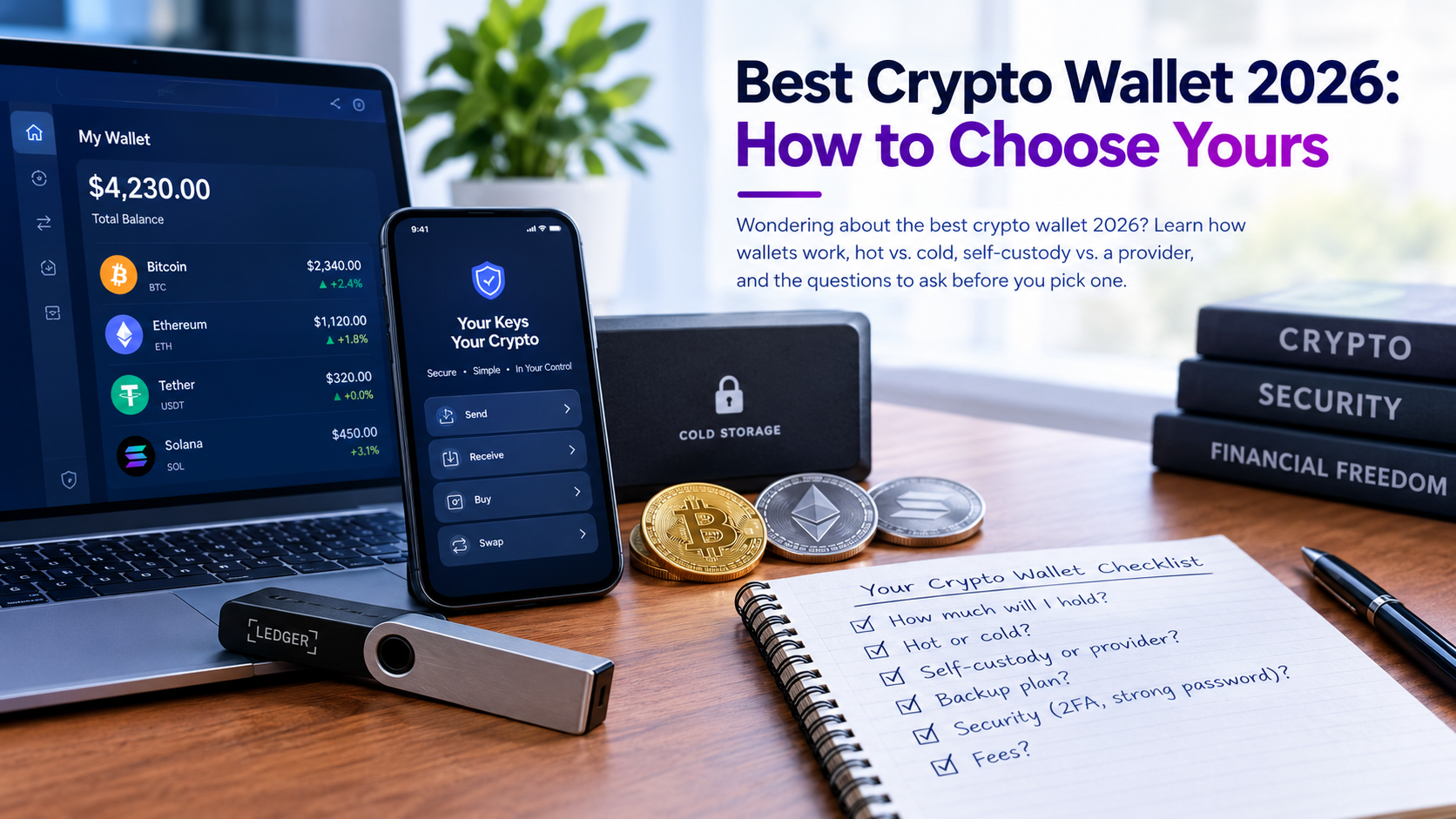
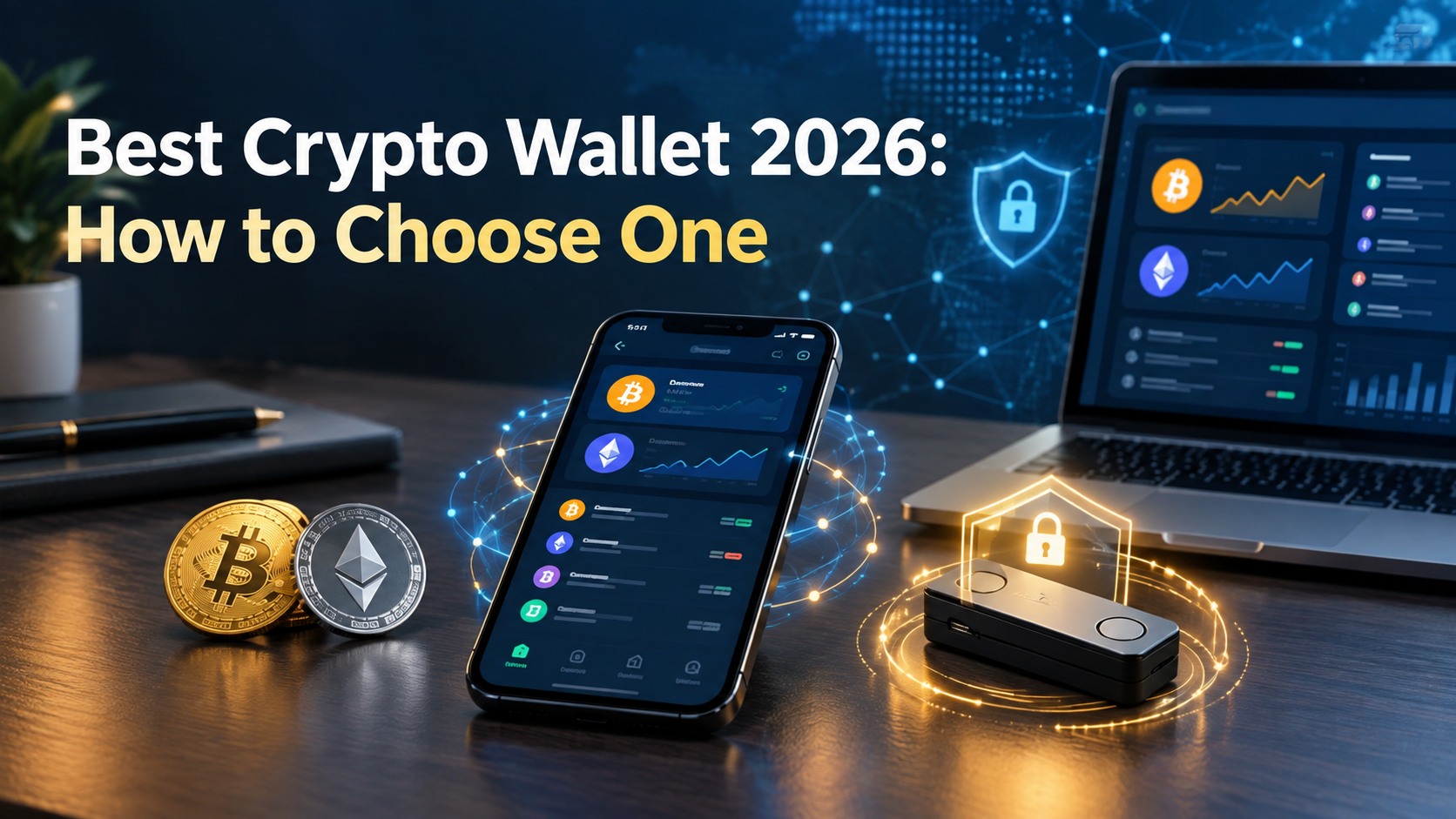
Hot wallets stay connected to the internet. MetaMask and Trust Wallet are the two you’ve probably heard of. They’re free, they take about five minutes to set up, and they’re fine for spending or trading crypto on a regular basis. The catch is exposure, since anything connected online carries some risk of malware or phishing.
Cold wallets don’t touch the internet at all. Ledger and Trezor make the most common ones, small devices that plug in or connect over Bluetooth only when you need them. Your keys stay locked inside even while you’re approving a transaction, which is why they’re so much harder to steal from remotely. You do pay for that in convenience, though. No device on hand means no sending crypto that day, period.
But generally, most individuals that hold cryptocurrencies over the long term will own both, a hot wallet to make daily transactions, and a cold wallet for whatever they cannot afford to lose.
Top Picks for 2026
Ledger is the name most security reviewers point to first for cold storage, and it’s earned that. Current models run on a certified secure chip that puts transaction approval on a screen malware can’t fake, and they’ll handle well over 5,000 coins and tokens without breaking a sweat. Think of it as a vault, not something you’re pulling out to buy a coffee. It’s built for parking crypto for months or years.
Prefer open-source code you can actually inspect? Trezor covers the same ground as Ledger but keeps its software public, which matters to people who don’t want to just take a company’s word for it.
On the software side, MetaMask is still the default door into Ethereum and DeFi. Browser extension, mobile app, and free, and it plugs into almost every decentralized app that exists. First-time users tend to find it a little overwhelming at first, honestly, but that eases off fast.
Trust Wallet does more or less the same job across more chains, and it’s built mobile first. One app, Bitcoin, Ethereum, and a handful of smaller coins—no juggling three different apps to check a balance.
Then there’s Phantom, which made its name on Solana and its near-instant, near-free transactions, then bolted on Bitcoin and Ethereum support later. If Solana is where you spend most of your time, it’s probably the smoothest thing you’ll use.
None of these five beat the others across the board. It is obvious that a day trader trading on five chains simultaneously requires a different approach from someone who bought Bitcoin in 2021 and has not traded since.
What Actually Matters When You’re Choosing
Skip the marketing and look at what’s actually underneath the app.
Start with security. Does the wallet keep your private key on your device, or does it live with a company somewhere? Hardware wins on this one, no contest, but a software wallet with a strong password and two-factor authentication turned on beats leaving anything sitting on an exchange.Coin support is the next filter, and it’s a quick one. If a wallet doesn’t support the chain you actually use, none of its other features matter.
Then there’s backup and recovery, which is where most people get burned. Every legitimate wallet hands you a recovery phrase, usually 12 or 24 words. Write it on paper. Not a phone, not a screenshot, not a note synced to the cloud. That phrase was the only thing standing between a guy in Ohio and the crypto that’s now sitting at the bottom of a lake.
Cost varies more than people expect. Hardware runs somewhere between $50 and $150 as a one time buy. Software wallets are usually free, though some tack on small fees for trades made inside the app.And don’t underrate ease of use. A wallet can be the most secure thing on the market and still fail you if it’s confusing enough that you start cutting corners just to get through a transaction.
How to Get Started Safely
Pick a wallet type based on how much crypto you’re holding and how often you plan to move it. Small, active amounts fit a hot wallet fine. Anything you’d be upset to lose belongs in the cold . Always download apps from the official site or the app store of your phone, and not through any link in a message or an email. Phishing apps that are used to steal the recovery phrase come out quite often, and there have been billions of dollars lost in cryptocurrency scams as recorded by the FBI’s Internet Crime Complaint Center. The Federal Trade Commission publishes updated guidance on spotting these scams, which is worth a look before you move real money anywhere.
Once your wallet is set up, send a small test amount before moving anything larger. If it arrives correctly, you know the address and network were right. For a deeper walkthrough on setting up your first wallet the right way, usacryptotrends.com has a step by step guide worth reading before you buy hardware.
Making the Final Call
There isn’t one single best crypto wallet 2026 has to offer for every person, and anyone claiming otherwise is skipping the part where your situation matters.Five-year Bitcoin holder would require a different system than weekly tokens trader. Choose the wallet that fits your cryptocurrency usage and not one that has the highest number of downloads on its app store. Put your recovery phrase on paper at the time of wallet creation and not afterwards when there is a problem.For ongoing coverage of wallets, security updates, and what’s changing in the space, usacryptotrends.com tracks it as things develop.
This article is for general information only and isn’t financial advice. Do your own research, and only invest what you can afford to lose.
Frequently Asked Questions
What is the safest crypto wallet in 2026?
Ledger and Trezor hardware wallets are believed to be the most secure since your private keys never get exposed to the internet even when you make a payment.
Do I need a hardware wallet, or is a software wallet enough?
For small and frequently used amounts, a software wallet with a good password and two-factor authentication will be sufficient. Larger amounts which do not need frequent use should be stored in cold storage.
What happens if I lose my recovery phrase?
If you lose both your device and your recovery phrase, your funds are gone for good. There’s no company to call and no password reset option.
Can I use more than one crypto wallet?
Yes, and many experienced users do exactly that, splitting funds between a hot wallet for daily use and a cold wallet for savings.
Are free software wallets actually safe to use?
If the user uses reputable free wallet options such as MetaMask or Trust Wallet and downloads them from their official sites while also using secure passwords and two-factor authentication, there is no danger.